
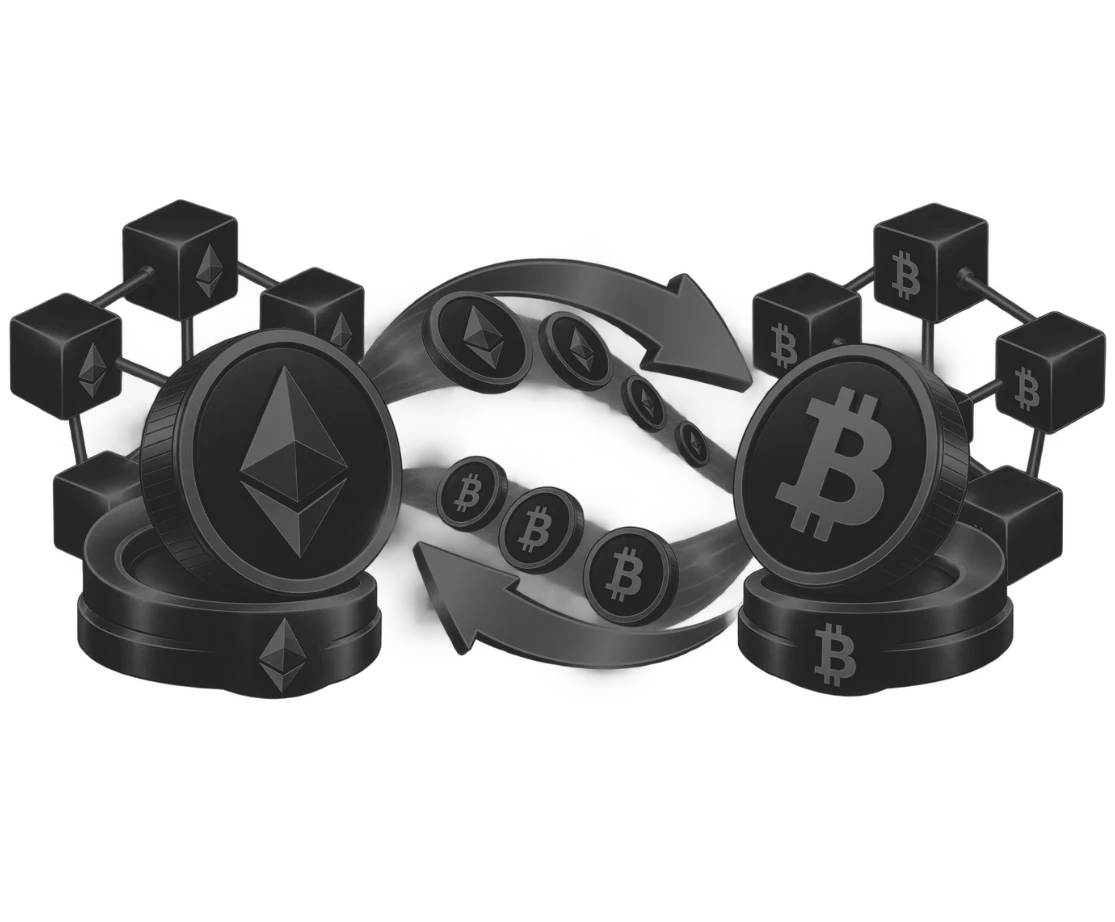
Cross-chain swap in Sparkling with native coins on both ends
Blockchains don't talk to each other. Moving value between them has meant bridges, which lock coins on one chain and issue copies on another, and bridges have been among the most attacked pieces of crypto infrastructure. Sparkling routes the crossing for you and delivers the real asset on the other side.
Cross-chain bridge swap versus an intent-based swap
There are two broad ways to cross chains. A bridge swap locks or burns your token on the source chain and mints a representation on the destination, then you swap that representation. An intent-based swap lets a solver deliver the asset you asked for on the destination chain and get repaid on the source chain.
| Bridge swap | Intent-based route | |
|---|---|---|
| What you receive | Often a wrapped token | The native asset |
| Steps for you | Bridge, wait, then swap | One request |
| Main risk | Bridge contract exploits | Solver fails to fill, funds return |
Sparkling uses intent routing through NEAR Intents among its routes, so you don’t need to pick a bridge or hold a wrapped copy.
Why wrapped tokens matter
A wrapped token is only as good as the contract or custodian holding the original. If that link breaks, the copy can lose its value even while the real coin trades normally. Receiving the native coin removes that extra dependency.
The most requested crossing among our users is ETH to SOL, from Ethereum’s fees to Solana’s speed.
How to do a cross-chain swap in Sparkling
Usually a minute or two, longer into Bitcoin.
- ≈ 3 min
- 4 steps
- Telegram or web
-
Check the source balance
Make sure you hold the token and a little of the native coin for gas on the source chain.
30 sec
-
Describe the swap
For example “swap 0.5 ETH to SOL” or “move my TON to bitcoin”.
30 sec
-
Review the route
The card lists both networks, the amount you receive and all fees.
Tip: Confirm before the quote expires.
30 sec
-
Sign
The token leaves the source chain and the new asset arrives on the destination chain.
1 min
Risks of cross-chain swaps
Cross-chain routes depend on more moving parts than a swap on one chain: two networks, liquidity on both sides and the solver or bridge in between. A route can be delayed, and in rare cases funds are refunded on the source chain instead of delivered. Sparkling app shows the status of each step; confirmed transactions cannot be reversed, and nothing here is financial advice.
Questions about cross-chain swaps
What is a cross-chain swap?
A trade that gives a token on one blockchain and receives a token on another.
How do I cross-chain swap?
In Sparkling, ask for the target coin and network, check the card and sign once.
Do I need a bridge?
No. The route handles the crossing, and you receive the native asset.
Which chains can I cross between?
Any pair across Solana, Ethereum, TON and Bitcoin works both ways. An overview of all swap types is on our crypto swaps page.
What if the swap gets stuck?
The card shows the status; if a route can’t complete, funds return to the source chain.
Updated: